
Returns processing and reverse logistics, defined
As of 2026, returns processing is the hands-on work that happens after a product comes back from a customer, retailer or distributor: receiving, inspection, grading, disposition and either restocking or write-off. Reverse logistics is the broader system around that work, covering the movement of goods back through carriers, warehouses, 3PLs and processing facilities until each unit is refunded, refurbished, relabelled, recycled or destroyed.
For most brands, this is no longer a back-office problem. It is a margin problem. The faster a returned unit is assessed and routed, the faster it returns to saleable stock or reaches the right next step. Handled poorly, reverse logistics becomes dead inventory, slow refunds and repeat customer complaints. Handled well, it protects cash flow, working capital and business continuity.
This guide explains where returns processing sits inside reverse logistics, what the workflow looks like, typical 2026 commercial cost ranges, the KPIs that matter and how to choose a partner that can handle volume without creating a second operational mess.
Returns processing vs reverse logistics at a glance
The two terms are often used interchangeably, but they are not the same. Outbound logistics gets products to market. Reverse logistics deals with what comes back.
| Area | Returns processing | Reverse logistics |
|---|---|---|
| Primary scope | Inspection, grading, disposition and rework of returned stock | The full return journey from collection through to final outcome |
| Starts when | The item physically arrives at a warehouse or processing facility | The customer, retailer or distributor initiates the return |
| Core systems | RMA rules, QA checks, SKU grading, WMS tasking, photo capture | Carrier management, routing logic, RMA authorisation, OMS, ERP and warehouse coordination |
| Typical outputs | Restock, compliance correction, resale, recycling or write-off | Refund completed, stock re-routed, value recovered and reporting closed out |
| Main operational goal | Recover value from each returned unit | Reduce cost, cycle time and friction across the whole returns loop |
How the workflow actually works
A strong reverse logistics operation follows a clear sequence. First comes return authorisation. Whether the trigger is a DTC return, a retailer debit, an overstocks program or a recall, every unit needs an RMA, SKU match and destination rule before it lands. Without that, the warehouse becomes a pile of unidentified exceptions.
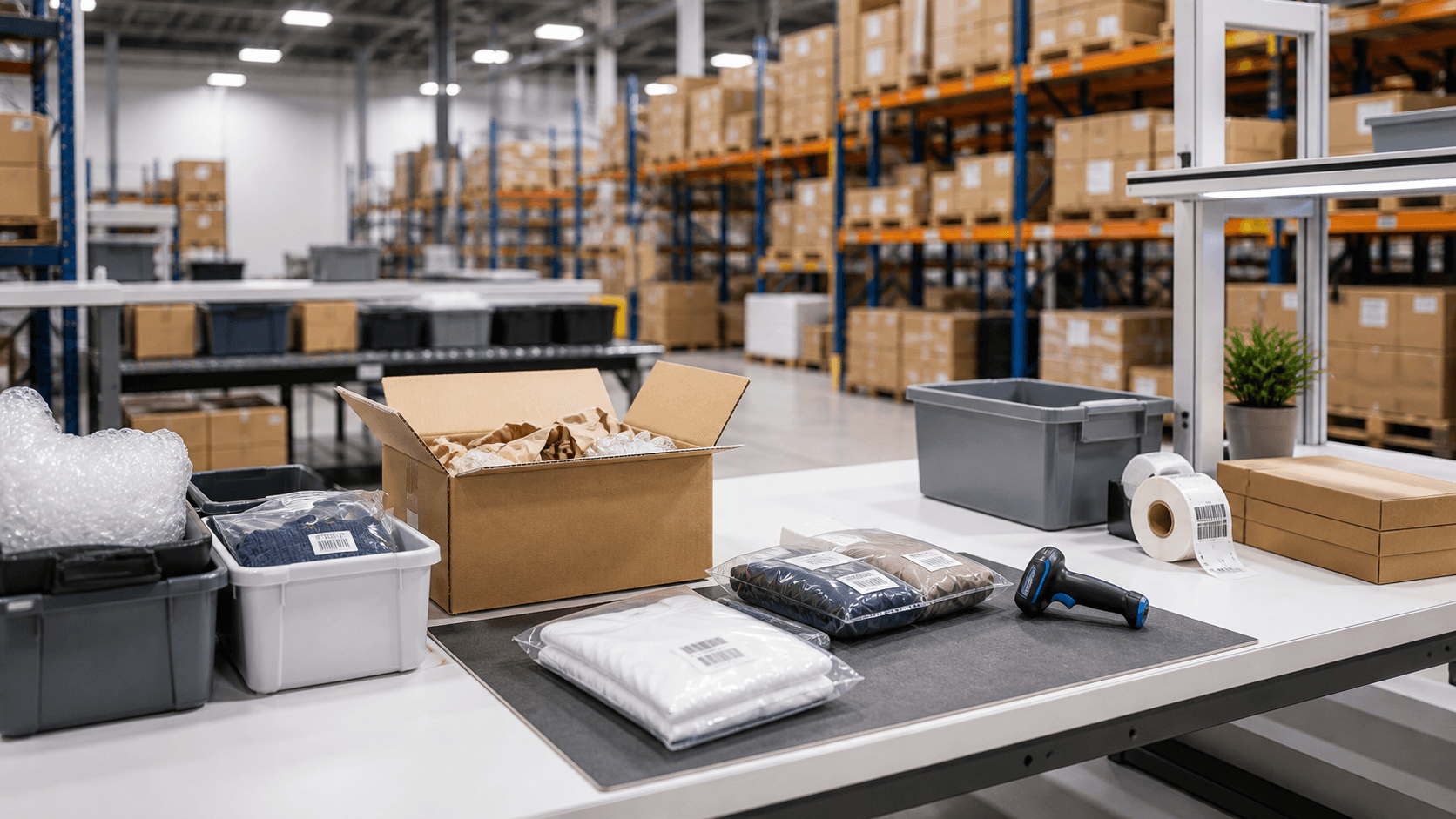
Second comes receipt and inspection. Returned units are booked in against the original order, purchase order or batch reference, then checked for seal status, cosmetic condition, expiry date, barcode readability and any fault notes from the customer or store. This is where verification matters, because a bad grading call at this point flows through the rest of the process.
Third comes disposition. Some units go straight back to stock. Others need repackaging, accessory replacement, firmware reset, cleaning, test-and-tag or reclassification into a lower grade. Regulated products may need a stricter path again, especially if labelling or traceability is involved. In those cases the workflow starts to overlap with our guide on how to manage a product recall.
Fourth comes settlement and reporting. Refunds, credits, supplier claims and retailer chargeback disputes all sit downstream of the physical process. The best operators close the loop with data: recovery rate by SKU, no-fault return rate, recurring defect codes, time-to-restock and disposition mix by channel. That is the point where reverse logistics stops being a cost centre and starts feeding decisions back into packaging, product quality and channel strategy.
This is where CleverPak support matters. Through CleverPak Connect, brands can track receipt, grading, rework status and output across one coordinated workflow rather than chasing parcel carriers, a 3PL and a separate rework site for updates. For enterprise brands, a single returns lane may involve parcel carriers, retail backhaul, 3PL and co-packing models, multiple warehouses and a specialist processing facility for exceptions. The orchestration matters as much as the labour on the bench.
Indicative costs and turnaround times
Costs vary with product type, inspection depth, required documentation and the percentage of units that need extra handling. The ranges below are typical commercial benchmarks across major English-speaking markets in 2026. They are indicative, not quotes. For a broader view of piece-rate mechanics, see our contract packing costs guide.
| Workflow | Typical volume | Indicative cost (USD) | Typical turnaround |
|---|---|---|---|
| Unopened e-commerce soft goods return, scan, inspect and restock | 1,000 to 10,000 units | $1.20 to $2.50 per unit | 2 to 4 business days |
| Consumer goods return, inspect, rebag or rebox, re-enter stock | 2,000 to 20,000 units | $2.00 to $4.50 per unit | 3 to 5 business days |
| Electronics triage, accessory check, basic test and grading | 500 to 5,000 units | $5.00 to $12.00 per unit | 5 to 10 business days |
| Retail or export correction, relabel, repack and reissue | 5,000 to 100,000 units | $0.45 to $2.20 per unit | 2 to 7 business days after setup |
| Urgent recall segregation with audit trail and controlled routing | 10,000 to 100,000 units | $1.50 to $6.00 per unit | 24 to 72 hours to mobilise, then rolling processing |
What drives cost and recovery most
The biggest cost driver is not freight. It is exception handling. A clean apparel return moves quickly. A mixed carton of damaged consumer goods, missing accessories and unclear paperwork does not. That is why apparel and fashion returns tend to process faster than electrical and electronics returns, where testing, serial capture and data security often sit in the flow.
- Disposition complexity. The more possible outcomes a unit can have, the slower and more expensive the process becomes. A three-way rule, restock, rework or destroy, is simpler than a ten-code matrix.
- Data quality at return authorisation. Missing SKU, batch, serial or reason-code data creates manual research before anyone can even inspect the product.
- Packaging condition. A pristine return can go back to shelf. A crushed box may still need value recovery work even if the product itself is perfect.
- Regulatory exposure. Products in food, healthcare, cosmetics and electronics often need stronger chain-of-custody, quarantine and sign-off controls than general merchandise.
- Accessory completeness. Chargers, inserts, manuals, lids, pumps and tamper components all affect whether a unit can be resold at full value.
- Channel promise. Amazon, Walmart, Tesco and Shopify-driven DTC programs all carry different expectations for refund timing, grading and restocking speed.
- Network design. Brands that centralise every return in one warehouse usually save on oversight and lose on cycle time. The better model is often local receipt, central rules and one accountable supply chain team.
How to choose a reverse logistics partner
Judge a reverse logistics partner on recovery, speed and control, not just a low handling rate. The wrong provider looks cheap until the first recall, seasonal spike or retailer dispute hits.
| Capability | Why it matters | What good looks like |
|---|---|---|
| Grading logic | Bad decisions at intake destroy value quickly | Clear restock, rework, resale and disposal rules with photo standards agreed before launch |
| Exception handling | Returns rarely stay in one simple lane for long | Standard returns, relabelling, accessory replacement and rework handled in one coordinated workflow |
| Traceability | Batch, serial and lot-controlled goods need audit-ready records | Every unit linked to an RMA, SKU, batch or serial with timestamped status updates |
| Surge capacity | Peaks and recalls break static warehouse teams | Capacity that flexes by season, channel and event without blowing out cycle time |
| Reporting quality | Returns data should improve the upstream supply chain | One reporting layer showing refund speed, recovery rate, defect codes and disposition mix by SKU and channel |
| Network resilience | One-site dependency becomes a risk during disruption | A facility network that can keep processing when one location is full or offline |
How CleverPak supports reverse logistics programs
CleverPak supports reverse logistics by combining local physical processing with one reporting and coordination layer. Brands use this model when returns start overlapping with returns processing, device services, compliance labeling and recall correction at the same time. It is especially useful when parcel returns, retailer sweeps and exception handling all need one accountable operating rhythm.
- One platform view. CleverPak Connect records receipt, grading, rework status, recovery output and exception notes in one place.
- Multi-step handling. The same network can inspect, relabel, repack, refurbish or route stock to secure destruction depending on the agreed rules.
- Cross-market coordination. Local processing can happen in-market while the brand still sees one operating rhythm across Australia, Singapore, New Zealand, the UK and the US.
- Surge coverage. Seasonal return spikes, retailer sweeps and urgent correction projects can be spread across multiple facilities instead of one congested warehouse.
- Actionable reporting. Returns data feeds back into packaging, quality, compliance and carrier decisions, so the brand learns from the return stream instead of just funding it.
Frequently Asked Questions
What is the difference between returns processing and reverse logistics?
Returns processing is the operational subset inside reverse logistics. It covers receiving, inspecting, grading and routing returned stock. Reverse logistics covers the whole return flow, including customer initiation, carrier movement, warehouse routing, refund logic, reporting and final disposition.
How quickly should returned stock be inspected in 2026?
For mainstream e-commerce and retail returns, best practice is same-day or next-business-day receipt and inspection, with restock-ready units back into available inventory within 24 to 72 hours. Slower than that, and the carrying cost starts to erode recovery. Regulated or technical products often take longer because serial capture, test steps or quarantine rules sit in the path.
Which products are usually worth restocking after a return?
Unopened, undamaged stock with intact packaging, valid shelf life and no contamination risk is usually the first candidate. Soft goods, accessories, general consumer items and some electronics can often be returned to saleable inventory after inspection. Food, therapeutics, cosmetics with broken seals and hygiene-sensitive items usually require a stricter rule set and may be routed to rework or destruction even when they look visually fine.
When should a returned product go to refurbishment instead of disposal?
Refurbishment makes sense when the recovery value clearly exceeds the extra handling cost and the product can still meet its resale or redeployment standard afterwards. Electronics, reusable transit items, hardware and some durable consumer goods are the most common candidates. Low-value fast-moving goods with missing components or short remaining shelf life usually do not justify the extra touch time.
How much does returns processing cost in 2026?
Simple soft-goods returns can sit around $1 to $3 per unit. Multi-step consumer goods returns often sit around $2 to $5. Technical or serialised returns can move into the $5 to $15 range once diagnostics or refurbishment are involved. The real question is not the handling rate on its own, but the net recovery after freight, inspection, rework, resale discounting and write-off.
When should a brand involve CleverPak in reverse logistics?
CleverPak is a strong fit when returned stock needs more than a simple warehouse receipt. That includes relabelling, repackaging, accessory replacement, refurbishment, controlled destruction, retailer sweeps and cross-market coordination. The value comes from combining physical handling with CleverPak Connect visibility, so operations, finance and customer teams can work from the same return data.
Do global brands need a reverse logistics partner in every country?
Not necessarily, but they do need local receiving capability in the markets where return volume is meaningful. Shipping every return back to one central country usually inflates freight cost, extends refund cycles and adds customs friction. The better model is local receipt, common grading rules and one reporting layer across the network.
What KPIs matter most in a returns operation?
Time-to-restock, recovery rate, cost per processed unit, no-fault return rate, disposition mix and refund cycle time are the six that matter most. If a provider cannot show those by channel and SKU family, they are handling returns, but they are not really managing reverse logistics.