
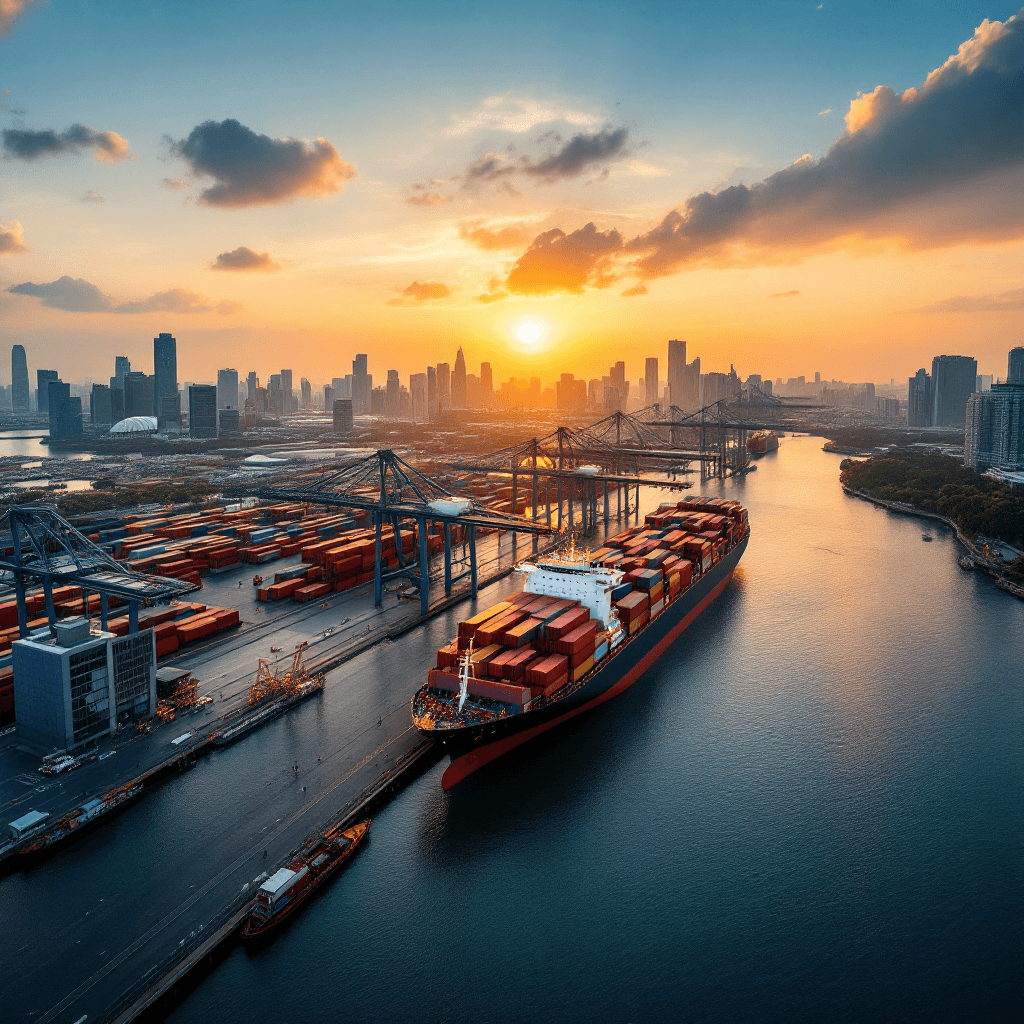
Why Singapore Is Absorbing the Tariff Shock
If you're managing any supply chain that touches Asia, Singapore has quietly become your most important strategic asset. Average US tariffs increased sixfold through 2025, 72% of APAC companies now report high tariff exposure, and every major logistics strategy report published this month points to the same recommendation: ASEAN diversification, anchored in Singapore.
This isn't a long-term play. Brands that already have processing and fulfillment capacity in Singapore are absorbing the disruption now. Brands that don't are facing longer lead times, higher landed costs and the kind of supply chain instability that costs retail windows.
What Changed in 2026
The tariff landscape shifted significantly through 2025 and into 2026. US tariffs on Chinese-origin goods rose sharply, triggering a cascade of supply chain responses: factory relocation, order cancellations and a scramble for alternative sourcing and processing locations.
ASEAN absorbed a significant share of that shift. Vietnam, Thailand and Indonesia have picked up manufacturing volume as brands reduced China dependence. But manufacturing diversification alone doesn't solve the downstream challenge. Products still need to be received, inspected, relabeled for target markets, packed to retailer specifications and dispatched to distribution centers. That processing layer is where Singapore excels.
Maersk's May 2026 strategic report identified Singapore and the broader ASEAN corridor as the primary buffer zone for brands managing tariff exposure across the Asia-Pacific region. The infrastructure, trade agreements and regulatory stability that made Singapore a global logistics hub are exactly the qualities that make it valuable in a volatile trade environment.
Why Singapore Specifically, Not Just ASEAN
Not all ASEAN locations are equivalent. Vietnam and Indonesia offer manufacturing cost advantages, but Singapore offers something different: regulatory certainty, trade infrastructure and proximity to both the production base and the markets you're serving.
Singapore's network of free trade agreements covers more than 20 countries, including the US, EU, Australia and Japan. Goods processed in Singapore can access preferential tariff rates that aren't available from other ASEAN locations. The customs environment is transparent and efficient. English is the working language of commerce.
For contract packing in Singapore, the workforce also brings specific value. Facilities with experience in regulated categories, including cosmetics, pharmaceuticals, food and electronics, mean you can process complex products that require compliance expertise, not just physical labor.
The Singapore Processing Buffer Strategy
The brands navigating 2026 most effectively aren't just diversifying where they make things. They're diversifying where they process, pack and fulfill them.
A Singapore processing buffer works like this: goods are manufactured across multiple ASEAN locations, shipped to Singapore for final processing, compliance labeling and retailer-specific packing, then distributed to markets across the region or globally. This model absorbs variation at the factory level. If a manufacturing partner in Vietnam has a quality issue, or new tariffs change the economics of shipping direct from Thailand, the Singapore hub continues without disruption to end customers.
CleverPak's Singapore facility handles multi-origin processing including assembly, kitting and bundling, compliance labeling updates, repacking for retailer requirements and distribution preparation. All managed from a single hub, keeping your supply chain moving while the manufacturing side adjusts.
What Work Makes Sense to Route Through Singapore
Not every supply chain activity benefits from Singapore routing. The work that benefits most has specific characteristics: high compliance sensitivity (products that need to meet different regulatory standards for different markets), value density (products where the cost of errors is high) and time sensitivity (products with hard retail deadlines or seasonal windows).
Categories that consistently benefit from Singapore-based processing include cosmetics and personal care with market-specific labeling requirements, nutraceuticals and supplements with varying regulatory standards across markets, electronics with serialization and compliance documentation needs, and promotional products with complex multi-component assembly.
If your supply chain involves any of these, having ASEAN fulfillment capacity based in Singapore isn't a discretionary cost. In the current environment, it's a competitive advantage that takes time to replicate.
Frequently Asked Questions
What makes Singapore a better ASEAN hub than other locations?
Singapore combines free trade agreement coverage across 20+ countries, political and regulatory stability, world-class port infrastructure and a trained workforce experienced in regulated product categories. Other ASEAN locations offer manufacturing cost advantages, but for processing, compliance and fulfillment, Singapore's infrastructure advantages are significant.
How quickly can we activate Singapore-based processing capacity?
With an established partner like CleverPak, activation typically takes days to weeks rather than months. The facility is already operational, the compliance frameworks are in place and the workforce is trained. You're not building from scratch: you're routing existing work through an established hub.
Does routing through Singapore affect our product's country of origin?
Country of origin is determined by where substantial transformation occurs, which is typically manufacturing. Processing, packing and labeling in Singapore doesn't change the country of origin for most products. That said, specific tariff treatments vary by product category and target market, so it's worth reviewing with your customs advisor.
Can a Singapore hub handle both ASEAN distribution and direct-to-consumer fulfillment?
Yes. Singapore is well-suited to both B2B distribution prep (palletizing, retailer compliance, documentation) and direct-to-consumer fulfillment. The logistics infrastructure supports both models, and CleverPak's Singapore facility can manage both within the same operation.
How does this model work alongside our existing 3PL arrangements?
A Singapore processing hub can sit alongside your existing 3PL arrangements rather than replacing them. Many brands use Singapore as a value-add processing layer upstream of their 3PL, handling compliance, kitting and packing before goods enter the 3PL network for final distribution. For more on how this fits together, see our guide on ASEAN fulfillment from Singapore.